Orchid Care: Expert Guide
A Phalaenopsis orchid that drops its blooms after six weeks isn't a failed plant — it's a plant that was watered on a schedule instead of a signal.
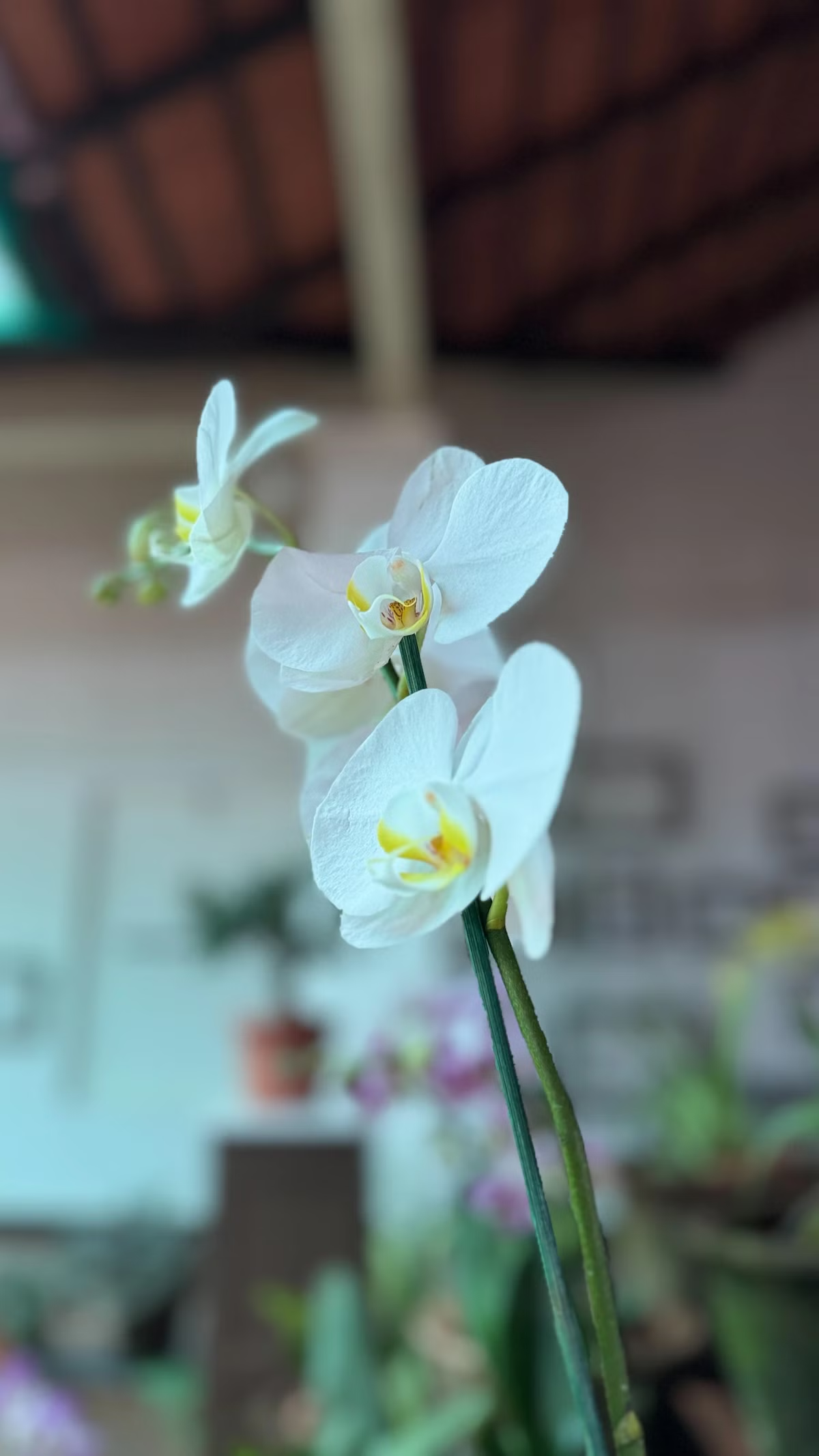
A Phalaenopsis orchid that drops its blooms after six weeks isn't a failed plant — it's a plant that was watered on a schedule instead of a signal. Orchids are the most misunderstood flowering thing we sell, not because they're delicate, but because nearly everything most people know about houseplant care is precisely wrong when applied to an epiphyte that evolved clinging to tree bark in dappled tropical shade. Learn to read the roots, and a single orchid will rebloom in your Georgetown bay window every year for a decade.
Start With the Biology: Why Orchids Break Every Houseplant Rule
Phalaenopsis — the moth orchid, the arching white-and-blush spray you see in embassy foyers along Massachusetts Avenue — is an epiphyte. In the wild it grows on the trunks and limbs of trees in Southeast Asia, roots exposed to open air, absorbing moisture from humidity and brief rain that drains away in minutes. It has never in its evolutionary history sat in wet soil. This single fact explains almost every orchid problem we're asked to diagnose.
Those thick silvery-green roots are covered in velamen, a spongy layer of dead cells that acts like a sponge and a raincoat at once. Velamen absorbs water fast, then dries fast, and that drying cycle is when the root takes in oxygen. Keep the medium constantly wet and the velamen never dries, oxygen exchange stops, and the root rots from the inside while the leaves stay deceptively firm for weeks. By the time the leaves wrinkle, the damage is a month old.
Read the roots and you have your watering schedule. Bright, plump green means hydrated. Silvery-white and slightly matte means thirsty. That colour shift is velamen losing water and filling with air — a built-in moisture meter more reliable than any calendar. Our Orchid Presence — Classic is planted in a coarse bark blend specifically so those roots stay visible against the container edge; the design decision is diagnostic, not just aesthetic.
Watering, Light, and the DC Row House Problem
Washington's climate does orchids an unexpected favor for eight months of the year. Our summers are functionally subtropical — July humidity in Navy Yard and along the Wharf regularly sits above 60 percent, which is close to what Phalaenopsis wants. The trouble is January through March, when forced-air heat and cast-iron radiators in older Capitol Hill and Dupont Circle homes drop indoor humidity into the twenties. That's desert air, and it's the single most common cause of bud blast: unopened buds that yellow and drop before they ever open.
Here is the watering method that works, regardless of season:
- Water at the sink, not in the cachepot. Lift the inner grow pot out, run tepid water through the bark for 15 to 20 seconds, and let it drain completely for two minutes before returning it.
- Never let water sit in the crown. The junction where leaves meet the stem holds droplets that invite crown rot. Tip the plant and blot with a paper towel.
- Frequency follows conditions, not the calendar. In a humid August apartment, once every ten days. In a February home with radiator heat, every five to seven. Check the roots first, always.
- Skip the ice cube advice. It became popular because it prevents overwatering by accident, but 32°F water against tropical roots causes cellular stress and, over time, root dieback.
Light matters just as much. Phalaenopsis wants bright, indirect light — an east-facing window is close to perfect, and most DC row houses have one. South and west exposures need a sheer curtain, because direct summer sun through unfiltered glass will scorch a leaf in an afternoon. A healthy orchid leaf is a medium olive green; dark forest green means insufficient light, and reddish-purple mottling means too much.
Feeding, Repotting, and Getting a Second Bloom
Bark is inert. It provides structure and airflow, not nutrition, so an orchid in bark is entirely dependent on you for minerals. The rule florists use is "weakly, weekly" — a balanced orchid fertilizer at quarter strength every second or third watering during active growth, from March through October. Flush the medium with plain water once a month to clear accumulated mineral salts, which build up in DC tap water and burn root tips.
Repotting is on a two-year cycle, and the trigger is the medium, not the plant. Bark decomposes into a fine, water-retentive compost that suffocates roots — when it looks like potting soil rather than chips, it's time. Repot after flowering finishes, never during bloom. Trim any brown, hollow, or mushy roots with sterilized snips, settle the plant into fresh medium-grade bark, and wait a week before watering to let cut surfaces callus.
An orchid spike that has finished flowering is not finished. It is a plant asking whether the conditions are worth the investment of a second bloom.
Reblooming is where most people give up, and where the biology is genuinely elegant. Phalaenopsis initiates new flower spikes in response to a sustained temperature drop — roughly two to four weeks of nights in the 55 to 62°F range. In Washington, that's mid-October. Move the plant to a cooler room, or an enclosed porch in Adams Morgan or Logan Circle where autumn nights dip naturally, and a spike will typically emerge within six weeks. On a spent spike, cut just above the second visible node from the base; the plant will often branch from there rather than starting over.
Choosing the Right Orchid for the Room
Scale is the decision most people get wrong. An orchid is architecture — its arching spike creates a horizontal line that needs breathing room on either side. A single-stem plant on a wide console reads apologetic; a triple-stem specimen on a narrow entry table reads crowded. Measure before you choose.
For a bedside table, a powder room, or a desk in a Dupont Circle office, a single graceful stem is exactly enough — Orchid Presence — Soft is designed at that scale, and its restraint is the point. For a dining room console or a hotel-style entryway where the piece has to carry the room on its own, the Orchid Presence — Statement holds a scale most cut-flower arrangements simply can't sustain past a week. And when you want orchid longevity with the softness of a garden planting, the Blush Orchid Garden Basket Arrangement pairs blooming stems with companion foliage in a low, generous silhouette that suits a Georgetown breakfast table beautifully.
A few situational notes worth knowing:
- Corporate and condo lobbies: Orchids outperform cut stems by a factor of eight or more in lifespan, which is why nearly every serious lobby program in Navy Yard and CityCenter runs on them.
- Sympathy and long recovery: A living plant continues past the week when bouquets fade — a quieter, longer form of presence. See our occasions guidance for framing.
- Housewarmings: Pair an orchid with something tactile and immediate; the Self-Care Flower Spa Set covers the first-night ritual while the orchid becomes the permanent resident.
Move an orchid as little as possible once it's settled. Phalaenopsis acclimates to a specific light angle and temperature, and repeated relocation during bud development is a reliable way to trigger blast. Choose the spot deliberately, then leave it alone — the plant will reward the patience for years. For broader guidance across everything we send out, our care guide covers cut stems and living plants alike.
Check your orchid's roots tonight — if they've gone silver, water it at the sink and let it drain fully, and you've already corrected the most common mistake in orchid care.
Tempo Lazer
Tempo Lazer Flowers Studio
From the Studio
More in Care Tips

Gerbera Daisies: How to Keep Them Upright
Gerbera daisies fail in a recognisable way: the broad head begins to face the floor while the stem still looks green.

Freesia: Fragrance, Colour and Vase Care
Freesia is purchased for fragrance as much as for colour.

Kokedama Care Beyond the First Week
Kokedama turns a plant's root ball into the visible container, wrapping growing medium in moss and cord.